Quick answer (TL;DR)
A clubhouse community is a residential neighborhood built around a shared social facility. At Achasta, that facility is the clubhouse connected to a Jack Nicklaus Signature 18-hole golf course along the Chestatee River in Dahlonega, Georgia. Access varies by membership level. The social calendar and event programming are what make private club communities different from standard planned subdivisions.
A clubhouse community wraps a residential neighborhood around a shared facility where neighbors actually show up. The programming, access rules, and social culture of that facility shape what daily life in the community looks and feels like for residents.
What is a clubhouse community?
A clubhouse community is a residential neighborhood, gated or not, built around a shared facility that is the social and recreational center for the people who live there. The clubhouse can range from a modest gathering space with a meeting room and a pool deck to a full private club with multiple dining rooms, event spaces, sports courts, and a professional kitchen.
The distinction between a clubhouse community and a standard HOA neighborhood with shared amenities comes down to programming. A pool and a fitness room are amenities. A clubhouse with an active social calendar, a dining room that hosts formal events, and a staff managing seasonal gatherings is a social institution. The physical size of the building matters less than what the community does with it.
A clubhouse community is a neighborhood where a shared facility (the clubhouse) is the social center for residents. The programming and access structure determine whether the community builds genuine shared culture or just shares a building.
In private golf communities, the clubhouse runs alongside the course, but the two serve different purposes. The course is why people joined; the clubhouse is how they stay connected to their neighbors. A community where people golf together but never gather at the clubhouse has a different feel than one where the holiday dinner gets planned around months in advance. Both kinds exist. Which kind a community is shows up in the calendar before it shows up anywhere else.
What a clubhouse facility typically contains
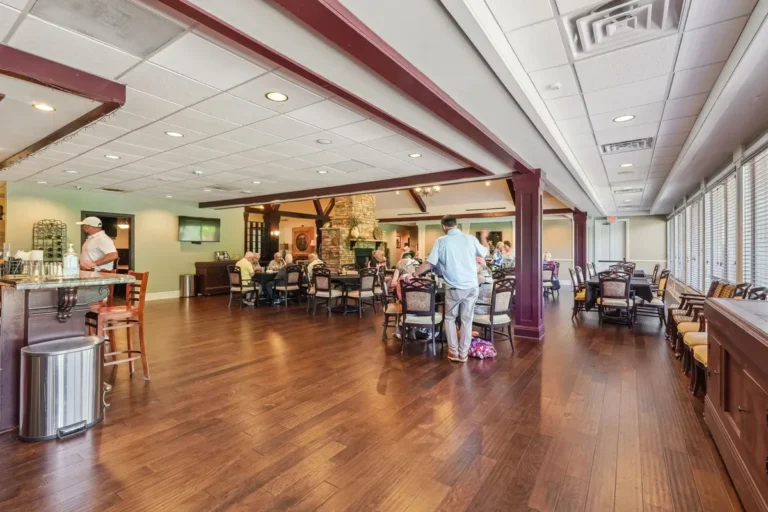
The physical layout of a private club clubhouse follows a recognizable pattern once you understand what each space does. The main dining room handles formal meals, holiday events, and seated dinners. A bar or casual grill area covers the informal side: post-round lunches, patio socials, weeknight gatherings. A covered terrace or patio extends the usable space outdoors for events that benefit from open air. Private rooms handle smaller functions: board meetings, rehearsal dinners, private birthday celebrations.
Core interior spaces
At the higher end of private club programming, the clubhouse runs professional catering rather than just warming food brought in from outside. That is what allows a private club to host a formal holiday dinner for a hundred members without an outside caterer. The kitchen is infrastructure for the calendar, not just for walk-in lunches.
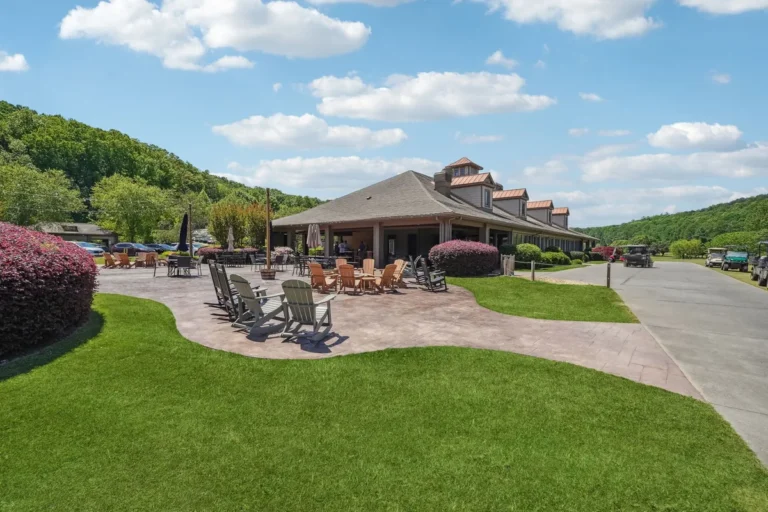
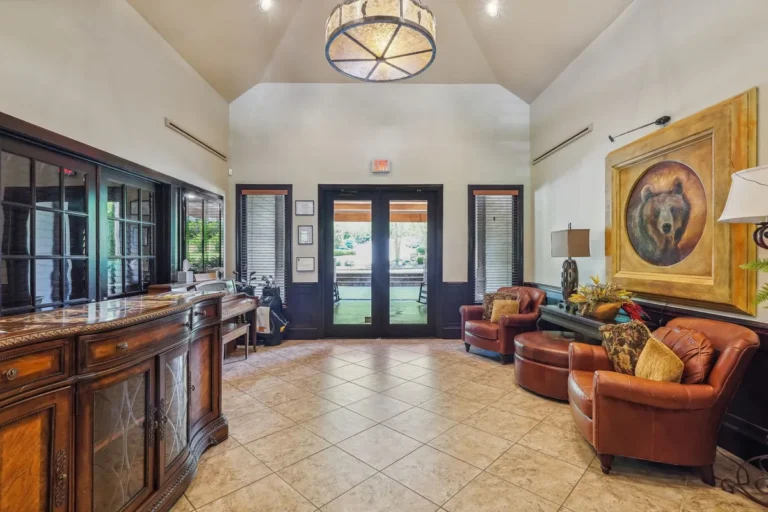
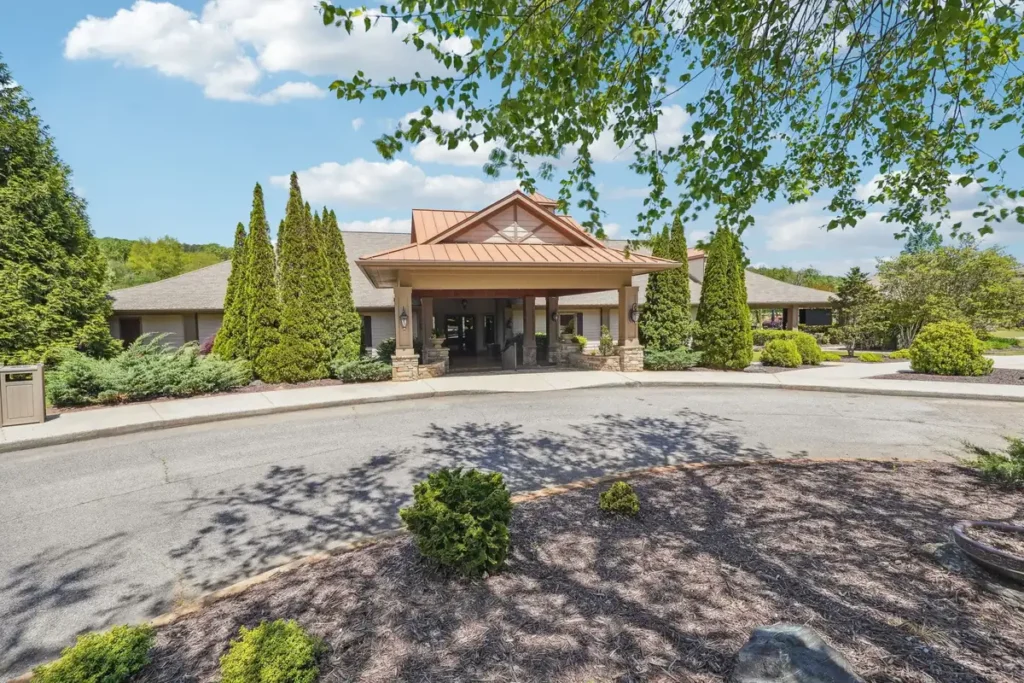
Details on the specific spaces inside the Achasta facility, the dining rooms, the event areas, and the connection from the building to the course, are in the Achasta clubhouse facility guide. That guide covers what the building looks like, how it connects to the Jack Nicklaus Signature course, and what the physical setting along the Chestatee River provides as context for events held there.
Surrounding amenities
Most private club communities extend the clubhouse program into the surrounding property: tennis courts, a swimming pool, pickleball courts, a fitness center. These amenities run separately from the main event calendar (open play, leagues, lessons, casual drop-in use) and fill the daily activity level that a formal dinner schedule cannot.
The physical contents of any private club change over time. Contact the club directly for accurate details about its current facilities and programming.
Access and membership: who can use a private clubhouse
Private club communities structure access around membership tiers, and the tiers determine what you can do and when. The exact categories vary by club, but the pattern looks roughly like this across most private golf communities:
| Membership type | Typical access scope |
|---|---|
| Full golf or equity membership | Course access plus full clubhouse use, all programming, social events, dining, and event spaces |
| Social or associate membership | Clubhouse, dining, and most social events; limited or no course access depending on the club’s structure |
| Resident without club membership | Varies widely. Some communities grant baseline clubhouse access to all residents; others require a separate membership tier |
| Invited guest of a member | Access at the member’s discretion; event-specific guest policies set by the club apply |
For Achasta specifically, the access structure (who can use the clubhouse, what membership categories are available, and how guest access works) is covered in more detail at who can use the Achasta clubhouse. The short version: access varies by membership level, and the right starting point is a direct conversation with the club.
Membership tiers, pricing, and access policies at any private club change from year to year. Nothing in this guide is a current Achasta membership policy or pricing document. For accurate, up-to-date membership details, contact Achasta Golf Club directly.
The social calendar: where community life actually happens
The social calendar is the difference between a community where people coexist and one where they actually know each other. In a clubhouse community, the calendar creates recurring occasions that pull people out of their houses and into a shared space. The formats range from informal patio socials to formal seated dinners, and the seasonal mix tells you more about the culture than any floor plan does.
A well-run private club calendar runs through the full year: casual outdoor events in spring and summer, dining-forward gatherings in fall, and holiday traditions in winter. The club manages the programming; residents participate. How active that calendar is reflects the culture of the community more honestly than any amenities list.
At Achasta, the clubhouse social calendar gets its own dedicated guide: the Achasta club events guide covers what programming looks like through the seasons, how the calendar moves from casual spring and summer gatherings to dining-forward fall and winter events, and what those patterns mean for prospective buyers thinking about community fit.
What the calendar reveals matters more than what the amenities list says. A community with tennis courts, a pool, and a clubhouse that sits dark after Labor Day is a different place to live than one with a December member dinner that fills the dining room. The first has amenities. The second has culture. The difference shows up in how the community feels to people who already live there, which is not something you can read from a brochure.
What a clubhouse community signals for real estate value
For buyers evaluating a private golf or club community, the clubhouse program factors into the purchase in ways that are harder to price than square footage. The quality of the clubhouse, the health of the membership, and the activity of the social calendar all reflect how durable the community is over time. A club that has held its programming through market cycles tends to hold its membership; one where the dining room sits empty and events keep getting cancelled is telling you something about where the community is headed.
Buyers working through a clubhouse community purchase tend to ask the same questions in roughly the same order:
-
Review the social calendar Programming through the full year signals genuine engagement. Ask for the past year’s event schedule, not just what is planned next month.
-
Understand the membership structure Who belongs, how many members there are, what the tiers cost, and what the dues history looks like. These go into the real carrying cost of ownership.
-
Visit at different seasons The community you see in October looks different in January. A single site visit tells you about the facility; multiple visits tell you about the culture.
-
Read the governing documents HOA dues, assessment history, reserve fund status, and any pending capital projects all affect carrying costs as a homeowner. These are available to buyers before closing.
-
Talk to residents Current homeowners will tell you what the cultural fit actually is. No brochure answers that question honestly.
What makes Achasta’s clubhouse community distinct in North Georgia
Achasta is built around a Jack Nicklaus Signature 18-hole golf course running along the Chestatee River in Dahlonega, Georgia. The course is why the community came into existence. The clubhouse is how it holds together socially. The setting, a river valley in the North Georgia foothills where the scenery changes through four genuine seasons, gives the programming a backdrop most private clubs cannot match. A harvest dinner in October with the Chestatee River valley behind it is a different occasion than the same dinner in a suburb.
What separates Achasta from other private club communities in North Georgia is the combination: course design, natural setting, and clubhouse program in one place. The clubhouse is not a shared amenity center that happens to be near a golf course. It is where the community’s social life happens, built for people who cared as much about their neighbors as about the course.
Frequently Asked Questions
What is a clubhouse community?
A clubhouse community is a residential neighborhood built around a shared facility (the clubhouse) that is the social and recreational center for residents. It may be gated or open, golf-focused or general-amenity-focused. The defining feature is that the clubhouse creates a gathering point for community life beyond shared property lines.
How is a clubhouse community different from a regular HOA neighborhood?
A standard HOA neighborhood shares common areas and enforces property standards. A clubhouse community adds a facility and programming: a place where residents actually gather, dine, and hold events together. The clubhouse creates occasions; the HOA creates rules. What matters is whether the calendar is actually active.
What does a clubhouse in a private community typically include?
At the higher end, a private club clubhouse includes a formal dining room, a casual bar or grill space, a covered patio or terrace, private event rooms, and a full kitchen for club-managed catering. Supporting amenities, including tennis courts, a pool, fitness center, and pickleball courts, often surround the main building. Specific contents vary by community; contact the club directly for what is available.
Who can access the clubhouse in a private golf community?
Access is typically structured around membership tiers: full golf or equity members get full clubhouse and course access; social or associate members access the clubhouse and events with limited or no course time; residents without a club membership may or may not have baseline access depending on the community’s structure; guests access at a member’s invitation.
Do I need to be a golfer to live in a clubhouse community?
No. Many private club communities offer social membership tiers that provide clubhouse and event access without course privileges. Many buyers use a social tier to access clubhouse and events without golf membership. Confirm current tier availability and pricing directly with the club.
What kind of events happen at a private club clubhouse?
Typical programming includes seasonal member socials, themed dinners, golf tournament celebrations, holiday gatherings, and private milestone functions. The mix shifts by season: casual outdoor events in spring and summer, dining-forward events in fall, formal holiday traditions in winter. Specific events and dates are managed by the club and communicated through member channels.
What does the social calendar tell me about a clubhouse community?
It tells you whether the community has genuine social fabric or just shared amenities. A full-year calendar with events members actually attend suggests the community is engaged; a thin calendar or events that keep getting cancelled signals something about membership health or cultural fit. The calendar is one of the most honest signals available to a prospective buyer.
How do membership levels work at private club communities?
Most private clubs offer tiered membership: full or equity tiers (typically highest cost, full access including course), social or associate tiers (clubhouse and events, limited course access), and sometimes resident-level access for homeowners who do not carry a separate membership. Verify the current structure directly with the club before making a purchase decision.
What is the Achasta clubhouse?
The Achasta clubhouse is the private social facility for the Achasta Golf Club community along the Chestatee River in Dahlonega, Georgia. It hosts member dining, seasonal events, private functions, and the social programming that gives the community its character beyond the golf course.
What makes Achasta’s clubhouse community different in North Georgia?
Achasta combines a Jack Nicklaus Signature course, a Chestatee River valley setting in the North Georgia foothills, and a clubhouse social program in one place. The setting gives seasonal programming a backdrop few private clubs can match. Fall foliage, the river valley, and the mountain scenery are part of what makes events at Achasta different from comparable clubs in the region.
What should buyers look for when evaluating a clubhouse community?
Review the social calendar for year-round activity, understand the membership structure and dues history, ask about the reserve fund, visit at different times of year, and talk to current residents about the actual culture. The amenities list tells you what’s available; the residents tell you whether people actually use it.
Can the Achasta clubhouse be used for private events?
Private functions, including birthday dinners, milestone celebrations, and pre-wedding events, are available to members through the club’s event team. Availability, catering, capacity, and pricing are handled directly by the club. Contact Achasta for current private event options.
Does living in a clubhouse community affect home values?
A healthy, active private club tends to support property values within its gates. Buyers pay a premium for the amenities and the social culture a private club delivers. The health of the membership, the quality of the programming, and the club’s financial stability all factor into how that value holds over time. Consult current MLS data and work with a local real estate agent familiar with the market to understand how specific communities have performed.
What is it like to live in Achasta, Georgia?
Living in Achasta means living in a private golf club community in Dahlonega, Georgia, where the clubhouse is the center of social life. The community is built around a Jack Nicklaus Signature 18-hole course along the Chestatee River, but daily life reaches past golf. The clubhouse hosts member dining, seasonal events and private functions, and the calendar moves from casual spring and summer gatherings to dining-forward fall events and holiday traditions in winter. The river valley setting in the North Georgia foothills brings four distinct seasons. Residents who do not golf can look at a social membership for clubhouse and event access; tiers and pricing change, so confirm them with the club. For the dining side, read what to expect from dining and events at the Achasta Clubhouse.
Considering a home in a North Georgia clubhouse community?
Achasta is one of a handful of private golf club communities in the Dahlonega area. Gold Peach Realty works with buyers and sellers throughout North Georgia. Our agents know the Achasta market, the membership structure, and how buying inside the gates compares to other options in the area.
List your Dahlonega, North Georgia home with Gold Peach RealtyQuestions? Call us: (770) 283-1223